


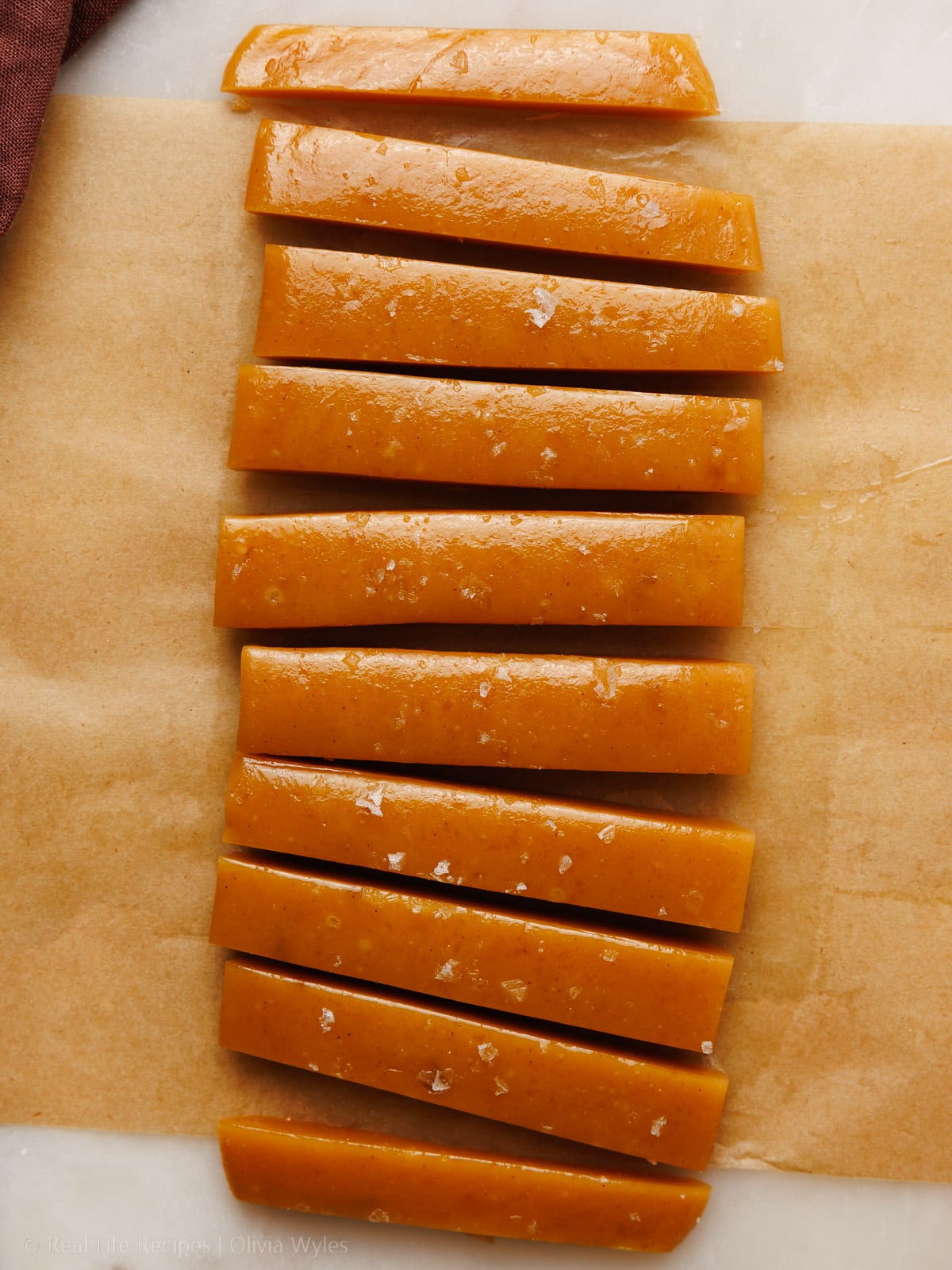
This 3-ingredient sugar-free apple caramel candy is chewy and sweet, just like the classic candy. This one is made without any added white sugar, and it gets sweetness from allulose and the natural sugars in apples.
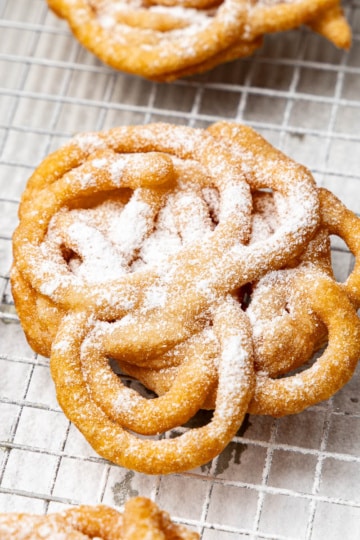
If you love fall treats with few ingredients, these 3-ingredient pumpkin cookies and 4-ingredient mini funnel cakes should be next on your list to try!
This post may contain affiliate links.
Want to Save This?
This recipe was inspired by fall, my husband's love of anything with apples in it, and my favorite hobby of developing nostalgic recipes with very few ingredients. I developed it on a whim one day. I wanted to see if you could add fruit puree to a caramel recipe without adding too much moisture (like my peach puree cookies). Apple butter has a lot of the moisture already cooked out of it so it works very well for this recipe. About 5 recipe tests later, I created the best chewy apple caramel candies without any added sugar.
Down below you'll find all my tips for getting the best apple caramel candy with only 3 ingredients!
Ingredients
Full ingredient amounts, instructions, and notes are in recipe card at the bottom of this post. (or use the 'jump to recipe' button at the top of this post).
Here's a few notes about key ingredients:
Allulose with fiber - Like my sugar-free gummy fish, this recipe utilizes the versatility of allulose with tapioca fiber for that perfect chewy texture and caramelization. I used Freely Sweet which is made specifically with allulose, soluble tapioca fiber, monk fruit, and Reb M. All ingredients have little affect on blood sugar and behaves like sugar. If you don't mind sugar, you can substitute it for regular white sugar (but then it won't be sugar-free, of course!). If you do use regular sugar, I recommend finishing it off with about ¼ cup warm heavy cream for best texture.
Apple butter - I made the apple butter with JUST APPLES and a little cinnamon. I peeled, cored, and cut up 4 apples. Simmered until soft. Used an immersion blender to puree. Then cooked the puree at a gentle boil, stirring often and constantly near the end, until it was thick enough to mound on a spoon. Then I scooped up ¼ cup for this recipe and saved the rest for other recipes.
How To Make
Caramel candy (especially a sugar-free version) can be a little tricky to make if you have never made it before, so I've added all my best tips below.

Before you get started: Get a bowl of ice water near the stove where you'll be working so you can test the candy's texture before removing the pan from the stove.
- Melt the butter over medium heat in a saucepan. Add the allulose and apple butter and stir constantly, about 15 minutes, until between soft and hard ball stage (sometimes called firm ball stage). Pour into a parchment lined loaf pan, sprinkle on sea salt if desired, then slice up.

Cold Water Test
Candy thermometers can be inaccurate so use your eyeballs and the cold water test. Firm ball stage is 245°F (118°C) on a candy thermometer, usually listed as 244 to 248°F depending on the source. It's the stage most caramels are cooked to, and it's what gives you a chewy caramel that holds its shape but still bites soft.
- How to Test: Drop a spoonful of the hot syrup into a bowl of cold water and let it sit a few seconds. You should be able to gather it into a ball with your fingers. The ball holds its shape when you lift it out, but it's still pliable. Squeeze it and it flattens with a little pressure, like a firm gummy or a soft chew.
- While Cooking: In the pot, the syrup is a deep amber color, and the bubbles are thick, slow, and glossy, not frothy and fast like earlier stages. The mixture also smells nutty and toasty.
Candy Thermometer stages (can be inaccurate):
- Firm ball (245°F) is chewy but sliceable and wrappable. This is what you want.
- Hard ball (250 to 265°F) gives you a tough, hard-to-bite caramel that can pull at your teeth.
- Soft ball (235 to 240°F) gives you a gooey, spoonable caramel that won't hold a shape, good for sauce.


Making The Apple Butter
Peel, core, and chop 4 apples. Simmer with cinnamon until soft, then puree with an immersion blender. Cook at a gentle boil, stirring often (constantly near the end), until thick enough to mound on a spoon. You'll use ¼ cup here. Save the rest for other recipes.
Find the printable recipe card below with all ingredient measurements, instructions, and my notes. Watch the video below as a visual guide.
Frequently Asked Questions
This recipe is labeled as sugar-free meaning it has no refined white sugar in it. All fruits have natural sugars in them which can spike blood sugar. Since this recipe makes a lot of servings and the amount of apple is small, each serving comes out to about 0.4g of sugar, with extra fiber to help slow absorption. Track your blood sugar, listen to your body, and work with a doctor to discuss what foods are right for you.
Allulose is a rare sugar that's found naturally in small amounts in things like figs and raisins. The kind sold in stores is made by converting fructose (usually from corn) with an enzyme. It tastes a lot like sugar, but your body mostly doesn't metabolize it, so it has very little effect on blood sugar, making it great for a sugar-free or keto diet. I chose it for this recipe because it caramelizes beautifully and other sugar-free sweeteners do not behave this way.
Too much allulose or fiber can upset some people's stomachs, so start with a small amount if it's new to you.
Additionally, in the U.S., the FDA doesn't count it toward sugar on nutrition labels, which is why I'm comfortable calling this sugar-free.
Other sweeteners don't work well in this recipe because caramel needs a sweetener that stays dissolved as it cooks down and cools, and allulose is one of the few sugar-free options that does. Erythritol recrystallizes as it cools, which makes the caramel grainy or turns it into a hard, gritty block. Many monk fruit and stevia "sugar" blends are mostly erythritol, so they have the same problem. Xylitol can crystallize too, and it's toxic to dogs, so it's a poor choice if you have pets at home.
Allulose resists crystallization, so the caramel stays smooth. It also holds moisture, which keeps the texture soft and chewy, and it browns into a true caramel color and flavor.
Allulose browns faster than regular sugar, so watch the pot closely and take it off the heat as soon as it reaches firm ball stage. If you want to try a different sweetener anyway, test a small batch first, since grainy caramel can't be fixed after the fact.
You can use sugar if you are not following a sugar-free lifestyle. I recommend adding ¼ cup heavy cream to finish it off after taking it off the heat for best texture.
Related
Recipe

3-Ingredient Sugar-Free Apple Caramel Candy
Ingredients
- 1 cup granulated allulose with fiber (I used Freely Sweet, see notes)
- ½ cup salted butter
- ¼ cup apple butter (see notes)
Instructions
- Melt the butter over medium heat in a saucepan.
- Add the allulose and apple butter and stir constantly, about 15 minutes, until firm ball stage.
- Pour into a parchment lined loaf pan, sprinkle on sea salt if desired. Careful, the caramel will be very hot.
- Cool in the pan about 10 minutes at room temperature before slicing into 16 pieces.
Notes
1 serving = 1 piece. This recipe makes 16 pieces of candy.
Comments
No Comments